Skip to content
EN RU UA
Connect a supplier

Plugins

The core does one thing: it takes the feed and puts it into the store. Everything on top — markup and discounts, photo processing, value replacements, marketplace feeds, meta tags — is a plugin. Each is switched on separately, and the program menu does not grow with their number.

switch on what you need · you can write your own

Suppliers

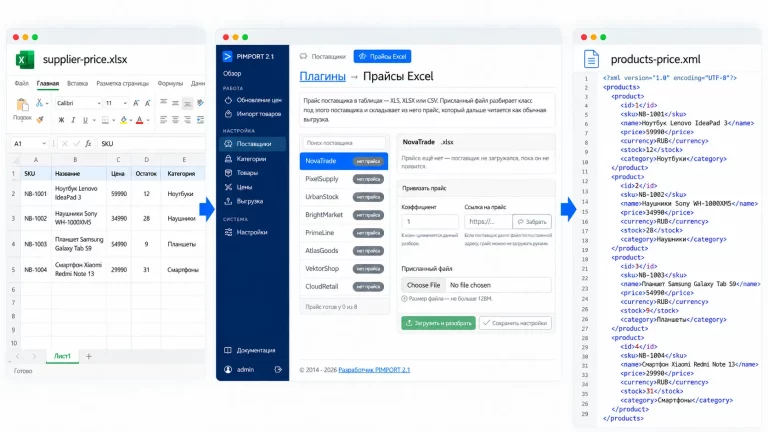
A feed as a table: XLS, XLSX or CSV

Products

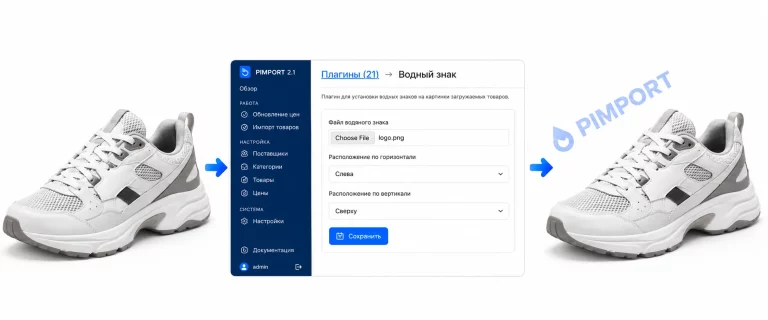
Pictures from the description, one size, a watermark

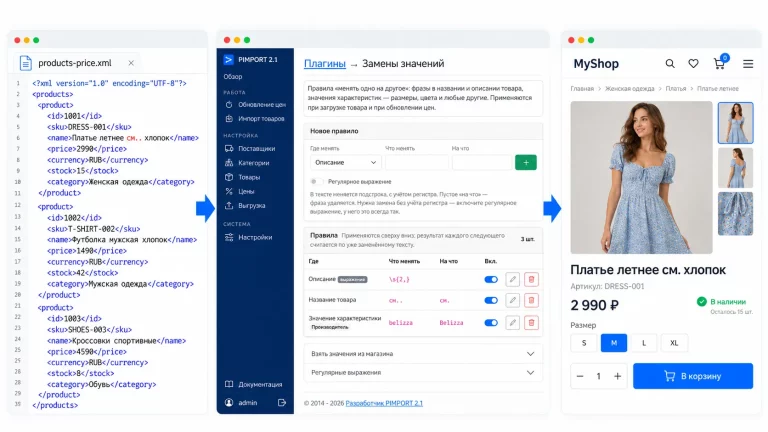
“Change this to that” rules for titles, descriptions and attributes

Product meta tags from a mask, a separate one per store category

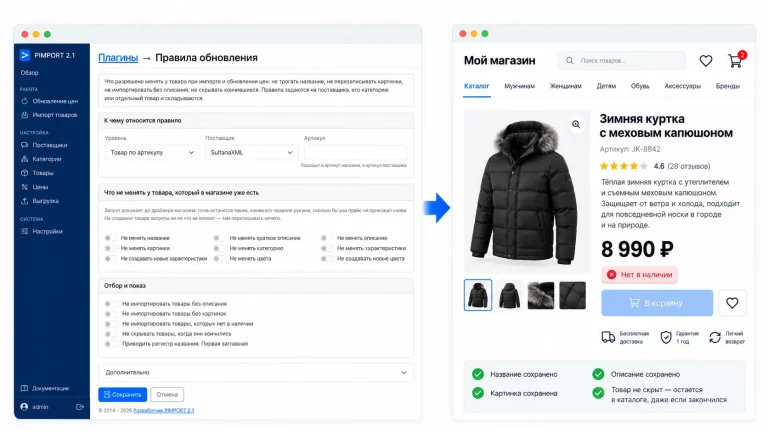
What may change on a product and what must not

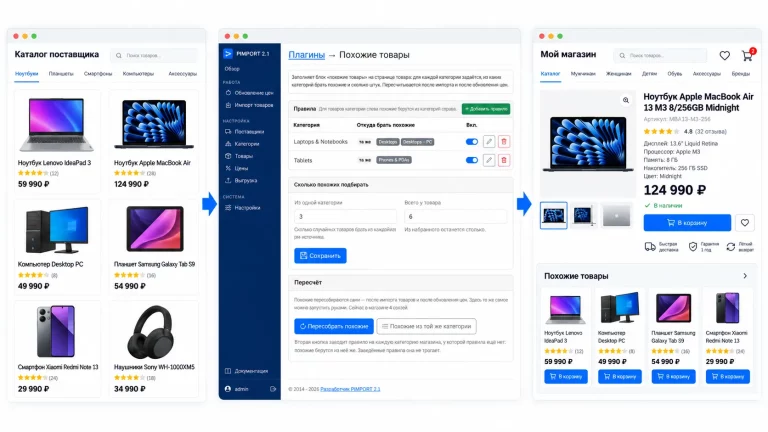
The “related items” block, filled by itself

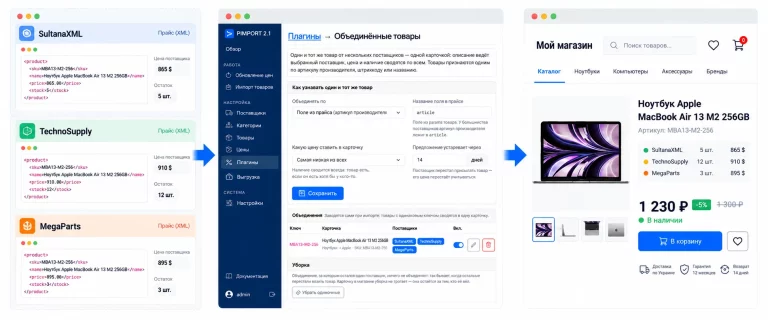
The same product from several suppliers as one card

Prices

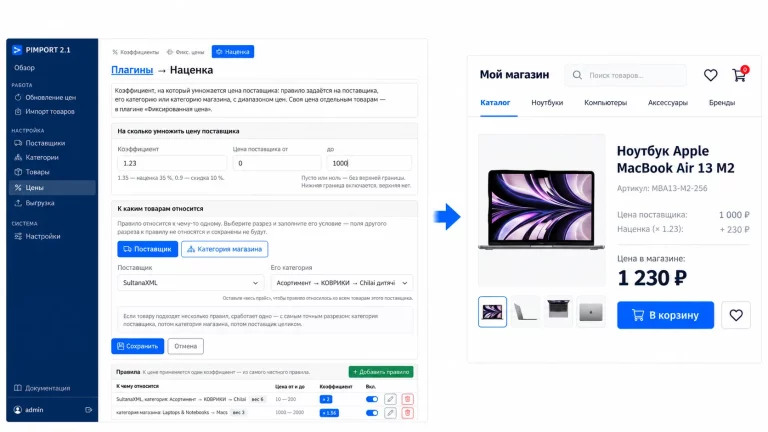
Markup

free

A coefficient on the supplier price, by rules

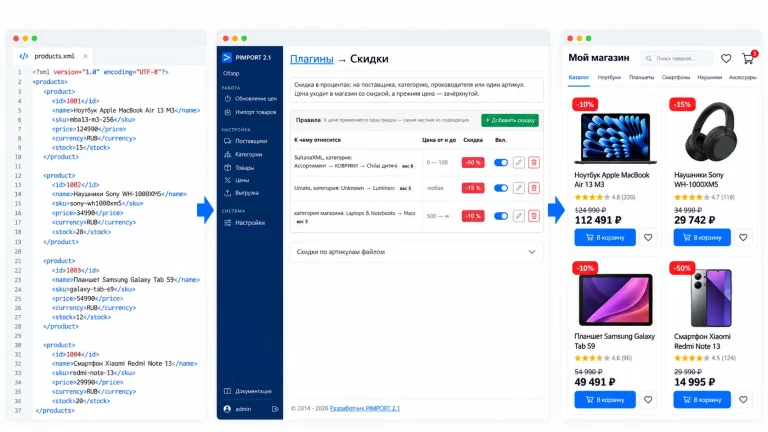
Discounts

$20

A percentage per supplier, category, brand or SKU

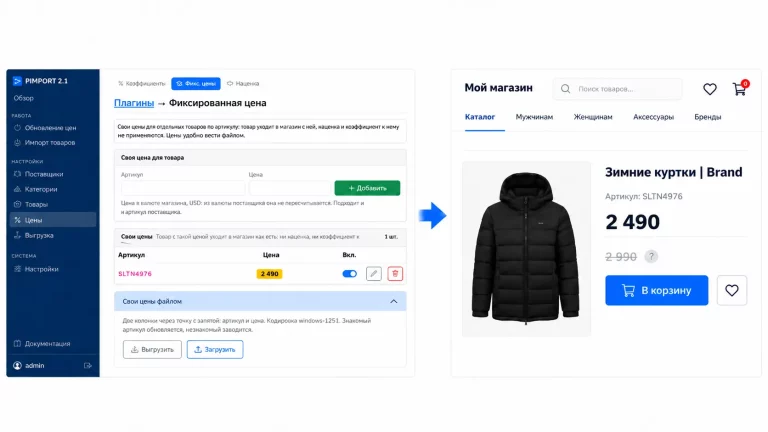
Your own price for particular SKUs

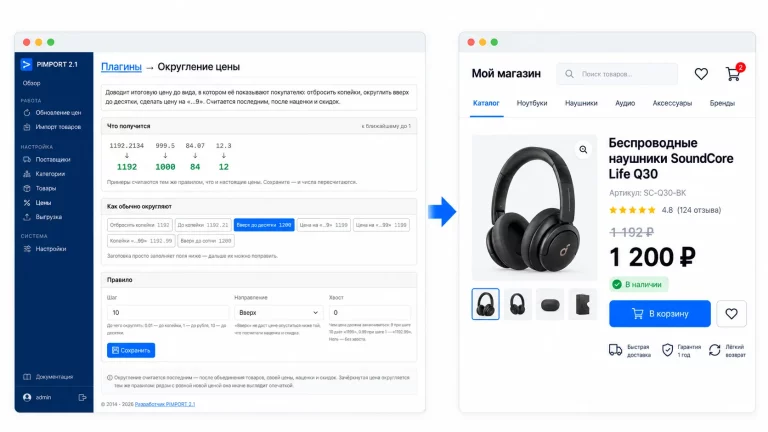
Drop the small change, round up to ten, end the price in “…9”

Export

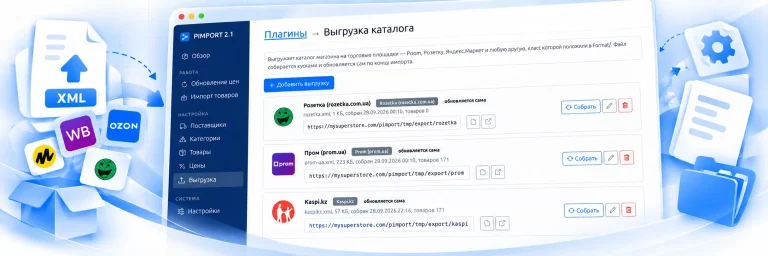
A feed for Rozetka, Prom, Satu, Kaspi and Yandex.Market

Tools

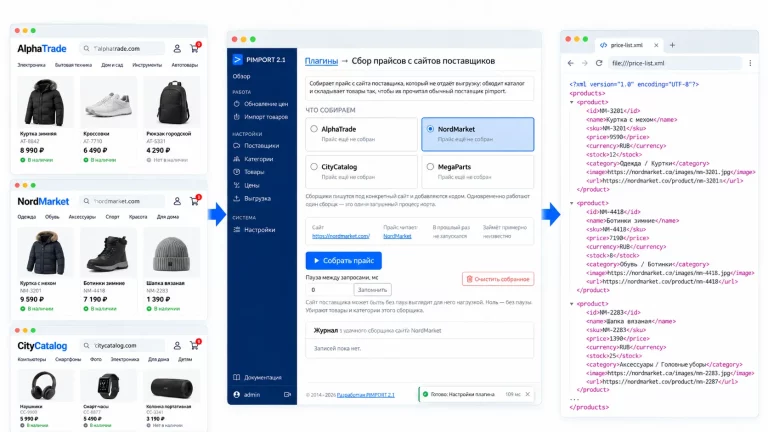
No feed — we collect the data from the supplier pages

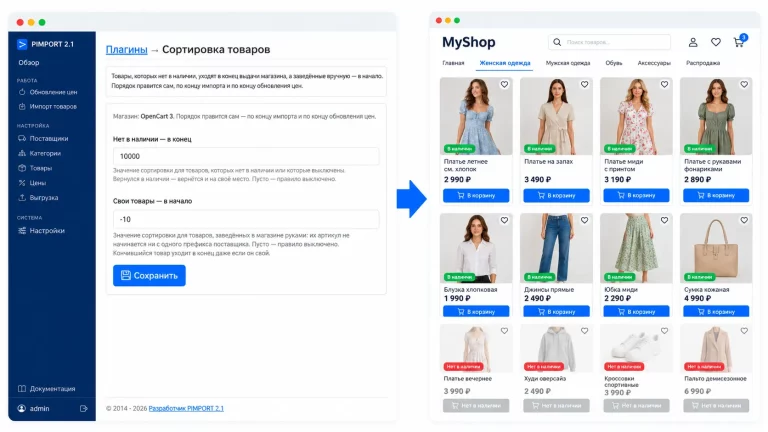
Out of stock drops to the bottom, hand-made products stay on top

Writing your own

The core is a frame: the import pipeline, events, storage, the templating engine and the UI shell. It has no product features of its own — everything a store actually sees comes from plugins, and that is on purpose. A plugin gets its own settings screen, its own tables and a place in the import pipeline.

A plugin may be tied to one platform, or even to one store — that is normal and it stays a plugin, the core is not touched. You can write your own without asking us: the format is documented and comes with the program.

Where it lives A folder in custom/Plugins — the model, the settings template and the install script.
What it can do Step into the import between reading the feed and writing to the store: change a price, a title, a photo, hide an item, write its own log.
What it gets Its own tables, its own settings page in the admin panel and the same storage the core uses.
On order If it is easier for us to write it than for you — describe the task, we will estimate it separately.

Work to order

The eight plugins above are the ones people asked for often enough to be worth keeping. Anything else we write to your requirements — the core is built for exactly that, and the source is open, so nothing is closed off.

A plugin for one supplier

A feed so unusual that a general parser cannot read it: its own field names, prices in a separate file, stock behind another link.

A format we do not read yet

Anything that is not XML, YML, CSV or Excel. JSON from an API, a feed behind a token, a 1C export.

An export where you need it

A feed for a marketplace, a price list for a partner, a file for accounting — built from your prices after markup.

Your own pricing logic

Rounding by your rules, competitor-based prices, a separate price for wholesale customers.

An unusual or custom platform

If the store is self-written, the program can be taught to write into its tables the same way it writes into OpenCart.

Moving off an old system

Carrying products, categories and mappings over from whatever kept the store up to date before.

How it is priced Describe the task — we look at it and name the price and the term before starting, the same as with a connection. The work is one-off: what we write stays with you and keeps running without us.
Describe the task
Need something the program does not do yet? We will build it You can write plugins yourself — the format is documented
Connect a supplier