Most stores have no warehouse of their own: the goods sit with the supplier, and prices and stock live in their feed. That feed is built the way the supplier finds convenient — XML behind a link, CSV with semicolons, an Excel workbook with merged header cells. Work with three suppliers and you get three different formats.
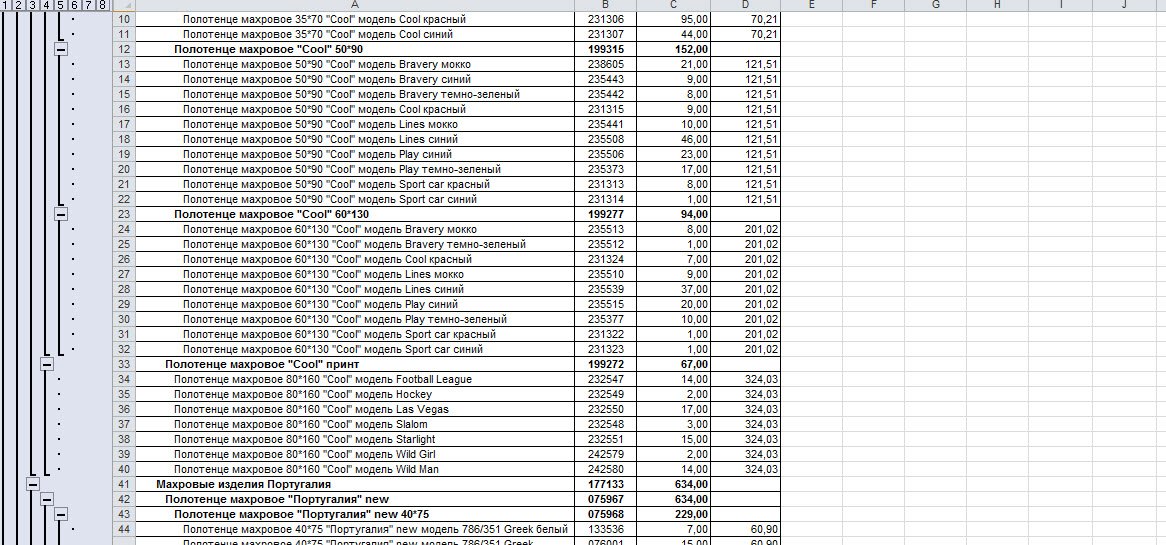

From there the question is one: how do you move this into the store, and how often.
1. By hand
Works while there are dozens of items. At hundreds the arithmetic starts: even a minute per product is several hours per feed update, and feeds do not change once a year.
2. Hire someone
Takes the routine off you but does not remove it: a wrong price is now their mistake and your consequence. And it is paid every month, whether the feed changed a lot or twice.
3. A cloud service
Quick to set up, paid monthly. Two caveats: your catalogue data leaves for someone else’s side, and you can only configure the processing rules the service thought of. Stop paying and the import stops.
4. A module for your CMS
Cheap and close at hand. But a module lives inside the engine and updates with it: update the store and the module may break. And on a large feed it hits the same limits as the store itself — execution time and memory.
5. A separate program on your own hosting
The program sits next to the store rather than inside it, and writes into its database through an engine driver. Hence its properties:
- feed size is limited by your hosting memory rather than by the program: parsing needs roughly three times what the file weighs;
- updating the store does not touch the import — they are different programs;
- there is no limit on the number of suppliers or items;
- processing is configured with plugins: markup, replacements, images, meta tags;
- paid once, with no subscription and no activation keys.
The honest downside: it is a separate program that has to be installed and set up, and for a store with twenty products it is overkill.
How to choose
The rule of thumb is simple. One supplier and a hundred items — a module is enough. Several suppliers, different feed formats, thousands of items and scheduled updates — a separate program works out cheaper, and the further you go the more noticeable it gets.
What we can read and what we need from you is on the Suppliers page. To check it against your own feed, send a link.